
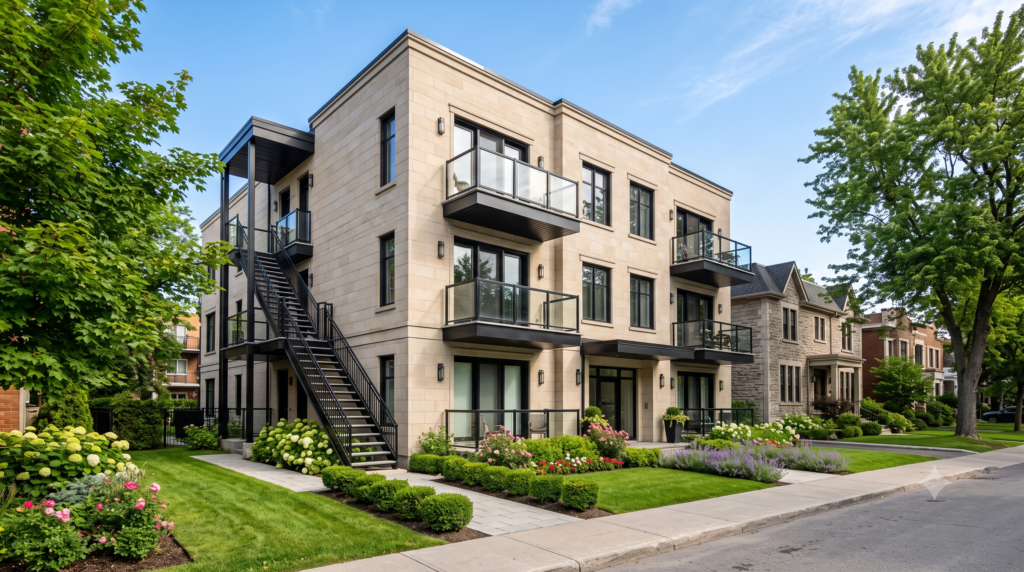
Proper maintenance helps preserve a building’s value and reduce repair costs over the long term. With a bit of planning and regular inspections, many duplex and triplex owners successfully handle routine maintenance themselves.
In Montreal, especially in neighborhoods such as Verdun, Saint-Henri, and the South-West, many small residential buildings are several decades old. Roofs, heating systems, and exterior components require regular attention. The goal is not to create a complicated maintenance program, but rather to develop a few simple habits that help prevent problems and make future repairs easier to plan.
Preventive vs. Corrective Maintenance
The first step is understanding the difference between preventive maintenance and corrective maintenance.
Preventive Maintenance
Preventive maintenance involves checking building components before a problem occurs. This may include:
- inspecting the roof;
- cleaning gutters;
- checking window seals;
- servicing the heating system;
- testing smoke detectors;
- watching for signs of moisture in the basement.
These inspections usually take little time and can help identify wear before it becomes a larger issue.
Corrective Maintenance
Corrective maintenance is performed when a problem already exists, such as:
- a water leak;
- a faulty thermostat;
- a broken lock;
- a clogged drain;
- water infiltration;
- a heating failure.
These situations often require faster intervention and may lead to higher costs if left unresolved.
Which Approach Is Best?
For a small building, focusing primarily on prevention is usually the simplest and most cost-effective approach. A seasonal inspection schedule is often enough to keep a good overview of the building’s condition and simplify maintenance planning.
Common Repairs in Small Residential Buildings
Duplexes and triplexes tend to experience many of the same recurring repairs. Knowing what to watch for helps owners anticipate expenses and avoid surprises.
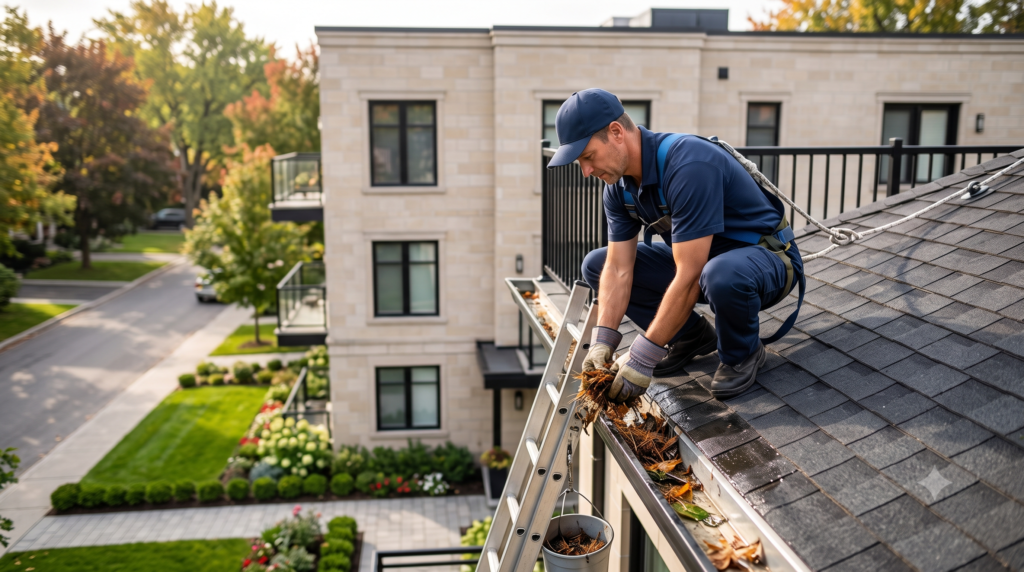
Roof and Gutters
Montreal’s freeze-thaw cycles can be hard on roofs. Key items to monitor include:
- damaged shingles;
- membrane joints;
- standing water;
- clogged gutters.
A spring and fall inspection is usually sufficient to catch the most common problems.
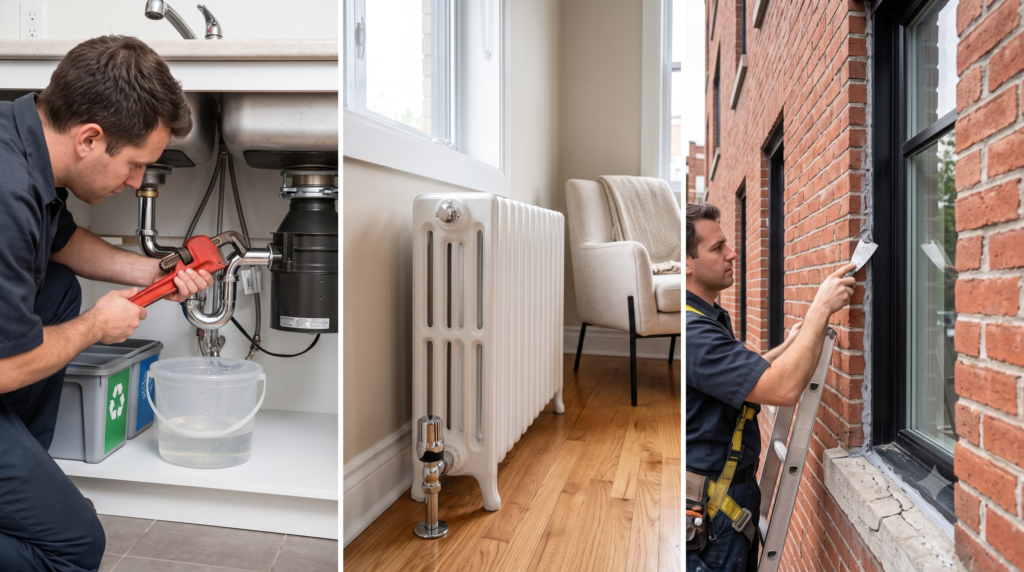
Plumbing
In older buildings, it is useful to check for:
- signs of corrosion;
- small leaks under sinks;
- water pressure issues;
- slow-draining pipes.
A small leak can sometimes go unnoticed for weeks, so regular visual checks are worthwhile.
Heating
Before winter, it is a good idea to:
- test thermostats;
- check radiators;
- service equipment according to the manufacturer’s recommendations;
- make sure tenants know how to report heating issues quickly.
Masonry and Exterior
Many Verdun and South-West buildings have brick facades. Watch for:
- visible cracks;
- crumbling mortar joints;
- the condition of balconies and stairs;
- signs of deterioration around windows and doors.
The goal is not to repair everything immediately, but to keep track of items that should be monitored during future inspections.
Organizing Maintenance Tracking
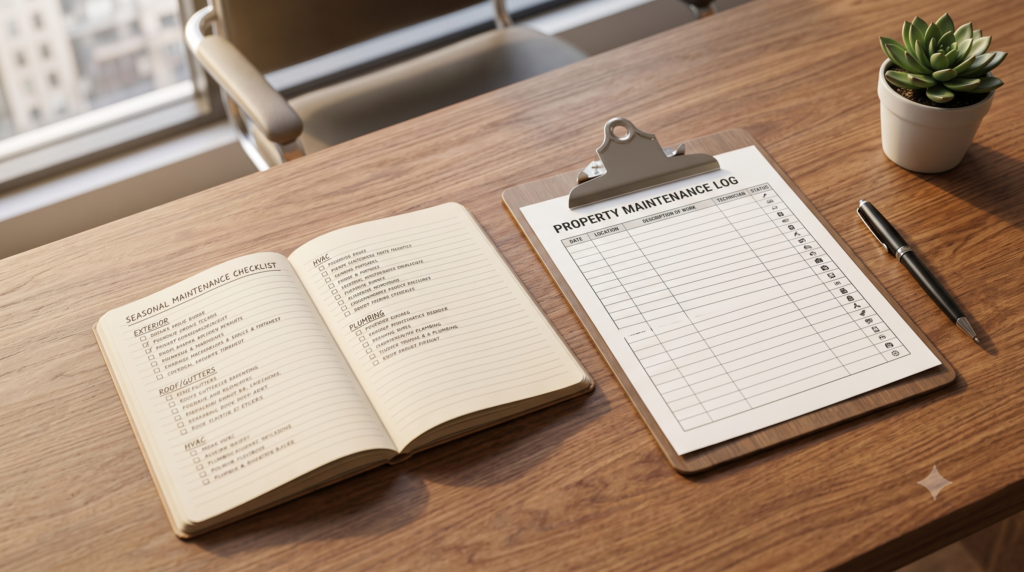
Efficient maintenance depends not only on repairs themselves, but also on keeping a record of completed work and planning future inspections.
Create a Maintenance Log
A simple spreadsheet or Excel file is often enough. For each intervention, record:
| Information | Example |
|---|---|
| Date | March 15, 2026 |
| Type of work | Leak repair |
| Contractor | ABC Plumbing |
| Cost | $325 |
| Warranty | 1 year |
| Next inspection | March 2027 |
Many owners simply use a shared Google Drive folder or spreadsheet to store invoices and maintenance notes. The important thing is to keep a clear history of the work that has been completed.
Plan Seasonal Inspections
A simple schedule might look like this:
- Spring: roof, gutters, foundation, exterior drainage;
- Summer: exterior paint, balconies and stairs, landscaping;
- Fall: heating system, windows and seals, gutter cleaning;
- Winter: heating monitoring, snow removal, checking for water infiltration.
This approach spreads inspections throughout the year and keeps maintenance manageable.
The Role of a Property Manager
Many owners choose to manage their buildings themselves, especially when they own a duplex or triplex. With a maintenance calendar, reliable contractors, and good record keeping, self-management can work very well.
Other owners prefer to entrust the complete management of the building to a property manager, particularly if they have limited time, own multiple properties, or live outside the neighborhood.
In that case, the property manager generally handles:
- coordinating maintenance and repair work;
- communicating with contractors;
- tracking completed work;
- administrative management related to the building;
- and overall maintenance planning.
The choice between self-management and full management depends mainly on the owner’s available time, experience, and desired level of day-to-day involvement.
Conclusion
Maintaining a small residential building in Montreal does not necessarily require a complex system. By performing regular inspections, keeping a simple maintenance log, and planning seasonal checkups, many owners successfully manage their duplex or triplex themselves.
The key is to stay organized and address small issues before they become larger problems. This helps preserve the building’s value, improve budget predictability, and maintain a comfortable environment for tenants.
Whether you own a duplex in Verdun, a triplex in Saint-Henri, or a small building in the South-West, maintenance can often be handled progressively with a few regular inspections and a simple tracking system.
If you eventually consider entrusting the complete management of your building to a property manager, the Nudrev team can explain its approach and answer your questions with no obligation.